
Our Declaration

Adopted in May 2024 by youth organizations and coalitions participating in Global Youth Voices, our Declaration sets out shared demands to prevent tobacco and nicotine addiction, protect public health policymaking from tobacco industry interference, hold the tobacco industry accountable, and safeguard present and future generations.

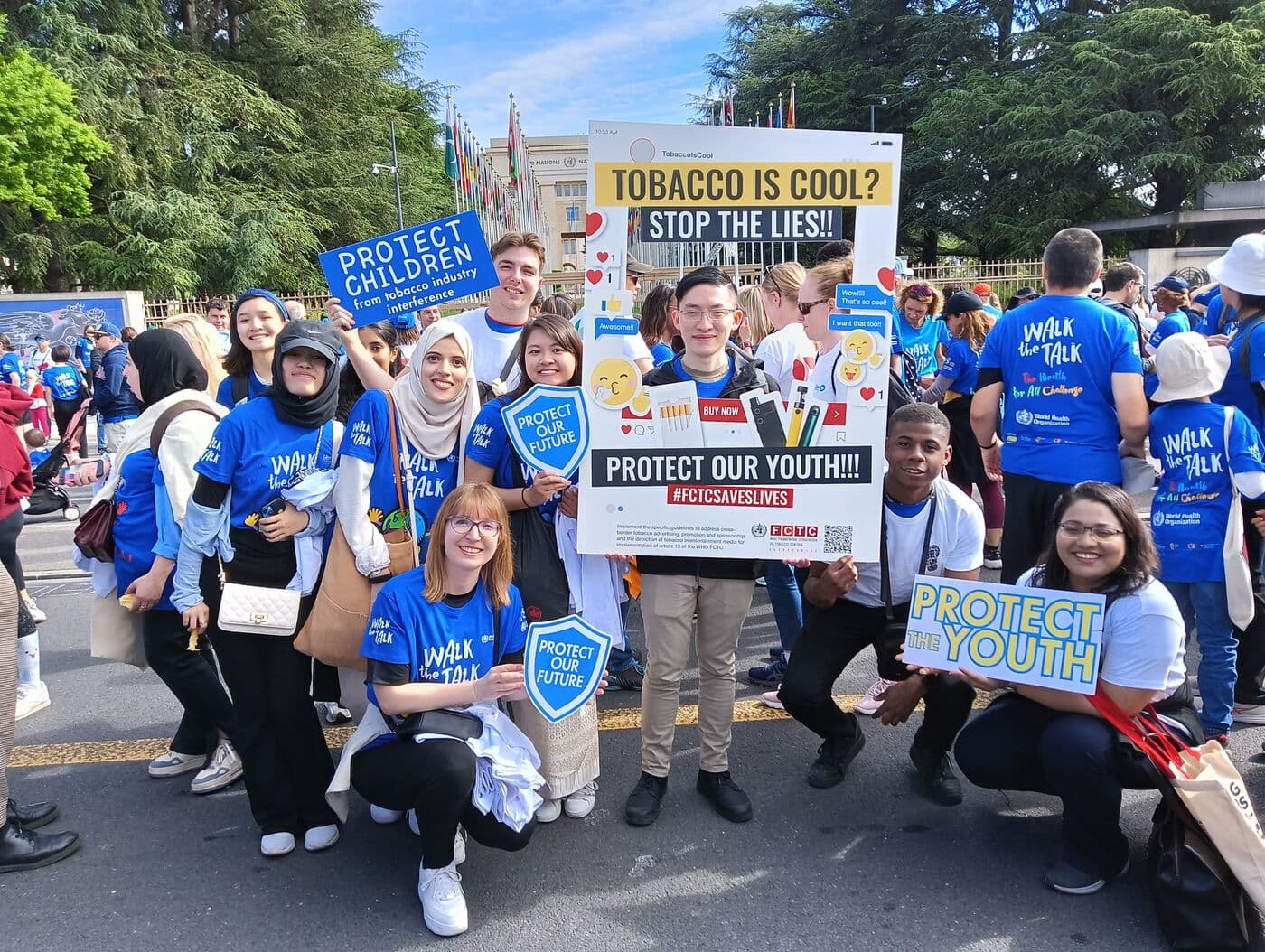
Young advocates in Walk the Talk T-shirts holding “Protect children from tobacco industry interference”, “Protect our future” and “Protect the youth” placards outside the Palais des Nations

One declaration.Shared global demands.

Our Declaration is the shared policy and advocacy framework of youth organizations and coalitions participating in Global Youth Voices. It establishes common positions on tobacco and nicotine addiction, tobacco industry interference, industry accountability, environmental harm, and the responsibilities of governments, policymakers, and other institutions.

It calls on decision-makers to adopt stronger tobacco control measures and protect present and future generations from tobacco industry harm and interference.

What we demand

A collective call from young people for stronger tobacco control, protection from tobacco industry interference, and accountability for industry harms.

  • Ban harmful and novel tobacco and nicotine products

    Governments should adopt and enforce bans on new recreational addictive tobacco and nicotine products and protect existing bans from tobacco industry interference. Tobacco industry products should not be treated as harm reduction strategies or public health interventions. Countries with bans should share their experience and support others in resisting industry efforts to weaken or overturn these measures.

    • Adopt and enforce bans on new recreational addictive products.
    • Protect existing bans from weakening, exemptions, or reversal.
    • Reject tobacco industry “harm reduction” and public-health framing.
    • Share strategies for resisting industry efforts to overturn bans.
  • Eliminate product appeal

    Governments should remove the features and marketing practices that make tobacco and nicotine products attractive to young people. This includes banning flavors and other appeal-enhancing features, alongside comprehensive bans on advertising, promotion and sponsorship. These measures should cover digital and entertainment media, cross-border marketing, and so-called corporate social responsibility activities used to promote the tobacco industry. 

    • Ban flavors and other appeal-enhancing product features.
    • Prohibit tobacco advertising, promotion and sponsorship.
    • Cover digital media, entertainment, and cross-border marketing.
    • Ban promotion through so-called corporate social responsibility.
  • Hold the tobacco industry financially and legally accountable

    Governments should hold the tobacco industry accountable and liable for the harms caused by its products and conduct, and advance WHO FCTC Article 19. Young people and future generations must have access to justice and compensation. Measures should extend beyond court cases to include administrative and legislative action, license revocation and financial guarantees against future harms. Industry payments must not become a means of evading liability or gaining public acceptance.

    • Advance WHO FCTC Article 19 on liability and cost recovery.
    • Ensure access to justice and compensation for harms.
    • Use license revocation, financial guarantees, taxes, levies, fees and penalties.
    • Prevent industry payments from buying legitimacy or shielding it from liability.
  • Protect the environment from tobacco industry harm

    Governments should eliminate cigarette filters regardless of material, ban disposable vapes, and address plastics, batteries and hazardous waste from tobacco-related electronic devices. They should reject industry-promoted “eco-friendly” filters and ineffective recycling initiatives. Apply the polluter-pays principle without extending Extended Producer Responsibility (EPR) privileges or benefits to the tobacco industry. Paying for environmental harm must not give the industry a role in environmental policymaking or make it an environmental partner. 

    • Eliminate cigarette filters, including “eco-friendly” alternatives.
    • Ban disposable vapes and address plastics, batteries and hazardous electronic waste.
    • Apply the polluter-pays principle to tobacco-related environmental harm.
    • Deny the industry EPR privileges, stewardship and environmental partnership roles.
  • Protect policymaking from tobacco industry interference

    Governments should protect policymaking from the tobacco industry and those furthering its interests, and advance the implementation of the WHO FCTC Article 5.3 across all government institutions. The industry must be excluded from policy development and must not be treated as a legitimate public health partner and industry-led industry funding, partnerships, and so-called corporate social responsibility activities must be rejected. Government officials and policymakers must limit interactions to those strictly necessary for effective regulation, and conduct them transparently.

    • Implement WHO FCTC Article 5.3 across government.
    • Exclude the tobacco industry and its representatives from policy development.
    • Reject industry partnerships, funding and so-called CSR/ESG activities.
    • Limit interactions to those strictly necessary and make them transparent.

Stakeholder groups

Key actions and obligations required from each stakeholder group to protect health, policymaking, and future generations.
  • adopt and enforce protective laws;
  • implement WHO FCTC obligations;
  • protect policy from tobacco industry interference;
  • establish liability and cost-recovery mechanisms;
  • reject industry partnerships and funding;
  • ensure action across government sectors.
  • avoid endorsing or promoting the industry;
  • scrutinize industry lobbying and proposed legislation;
  • adopt conflict-of-interest and transparency rules;
  • ensure national and local policy coherence.
  • support Parties in implementing the WHO FCTC;
  • keep tobacco industry actors out of UN premises and events;
  • champion accountability for industry harm on the global stage.
  • reject tobacco industry funding, sponsorship, and partnerships;
  • raise public awareness of industry tactics and harms;
  • amplify youth-led advocacy and independent research.
  • model and encourage tobacco- and nicotine-free environments;
  • talk openly with young people about industry marketing tactics;
  • support school policies that protect students from these products.
  • organize and advocate for stronger tobacco control policies;
  • hold decision-makers and the industry accountable;
  • participate meaningfully and independently in policymaking.

Our shared demands

Explore the Global Youth Voices and our common calls to protect present and future generations from tobacco industry harms.