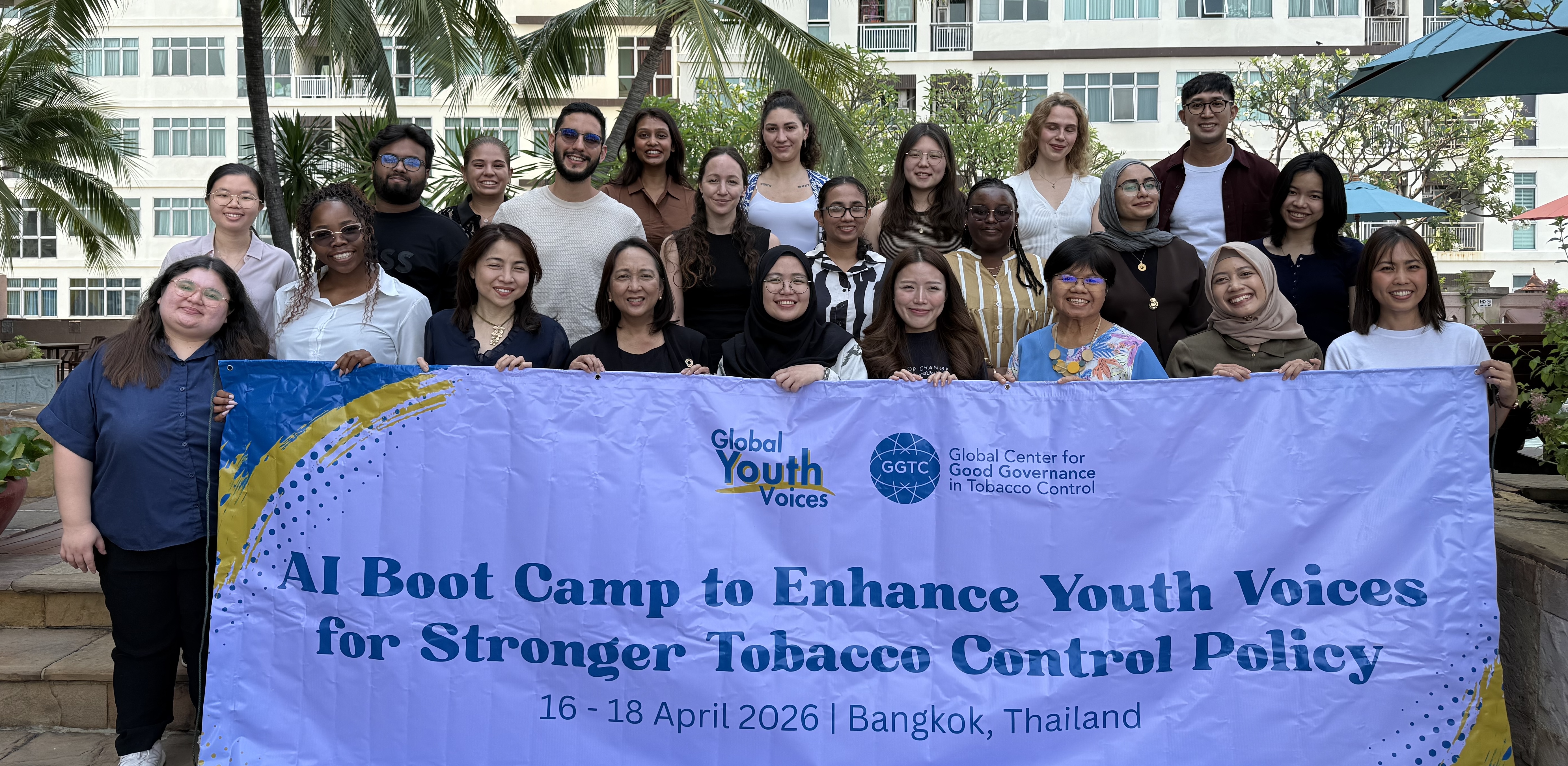
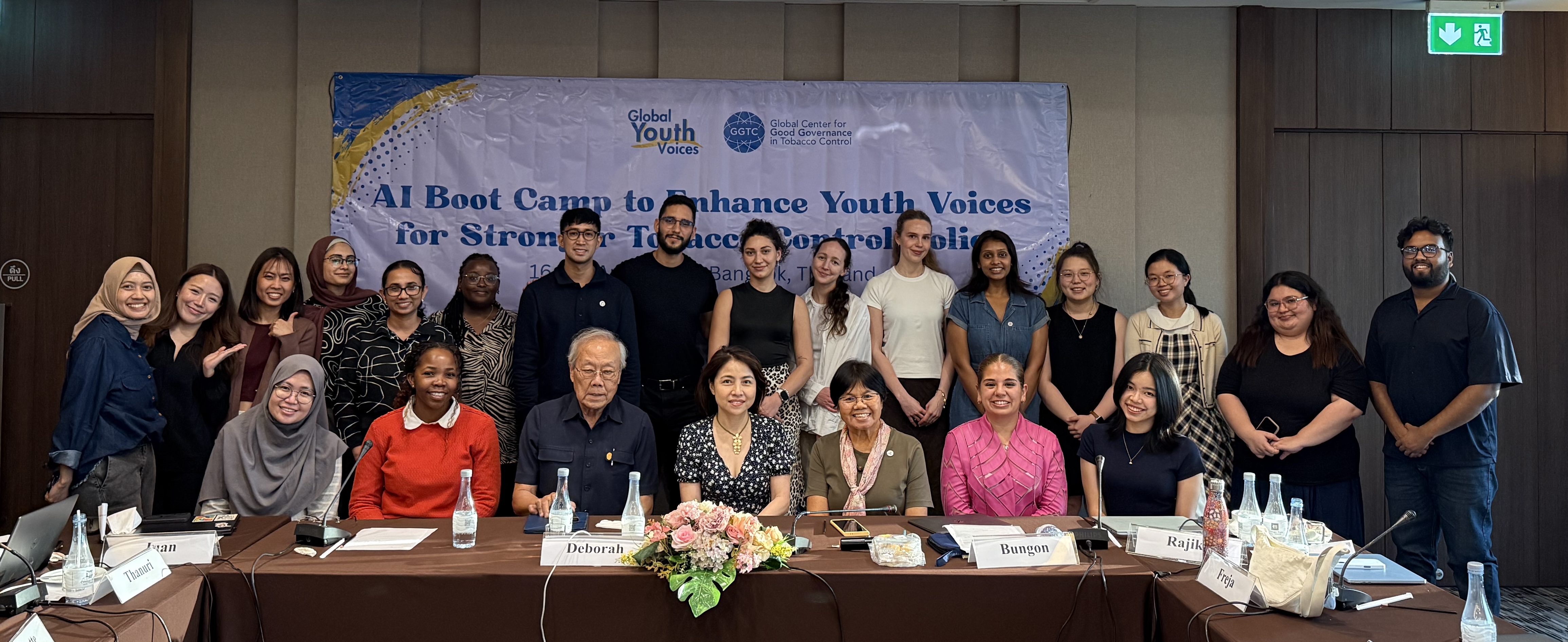
From 16–18 April, 2026, in Bangkok, Global Youth Voices (GYV), convened by the Global Center for Good Governance in Tobacco Control (GGTC), brought together youth leaders for an intensive AI Boot Camp focused on leveraging the use of leading AI tools to drive effective advocacy, messaging, and content production. The Boot Camp was designed as a working space to align youth positions and prepare coordinated advocacy efforts starting with the upcoming World No Tobacco Day (WNTD), celebrated on May 31, leading up to the 12th session of the Conference of the Parties (COP12) to the World Health Organization Framework Convention on Tobacco Control (WHO FCTC).
As tobacco companies continue to target young people through new products, digital marketing, and misleading environmental claims, fragmented messaging weakens policy outcomes. The Boot Camp focused on building a consistent, high-ambition youth voice, one that clearly distinguishes between strong public health measures and incremental approaches that fail to protect young people.
Over three days, participants worked through core policy issues shaping global tobacco control. These included tobacco advertising, promotion and sponsorship (TAPS), youth-targeted nicotine products, environmental harms such as toxic plastics, and ongoing tobacco industry interference. Sessions drew on evidence from the Global Tobacco Industry Interference (GTI) Index to examine how governments continue to be influenced by tobacco industry tactics. Across all sessions, one position remained consistent: the tobacco industry is not a stakeholder in public health policy. This reflects the GYV Declaration, which calls on governments to reject industry influence and prioritize the protection of youth.
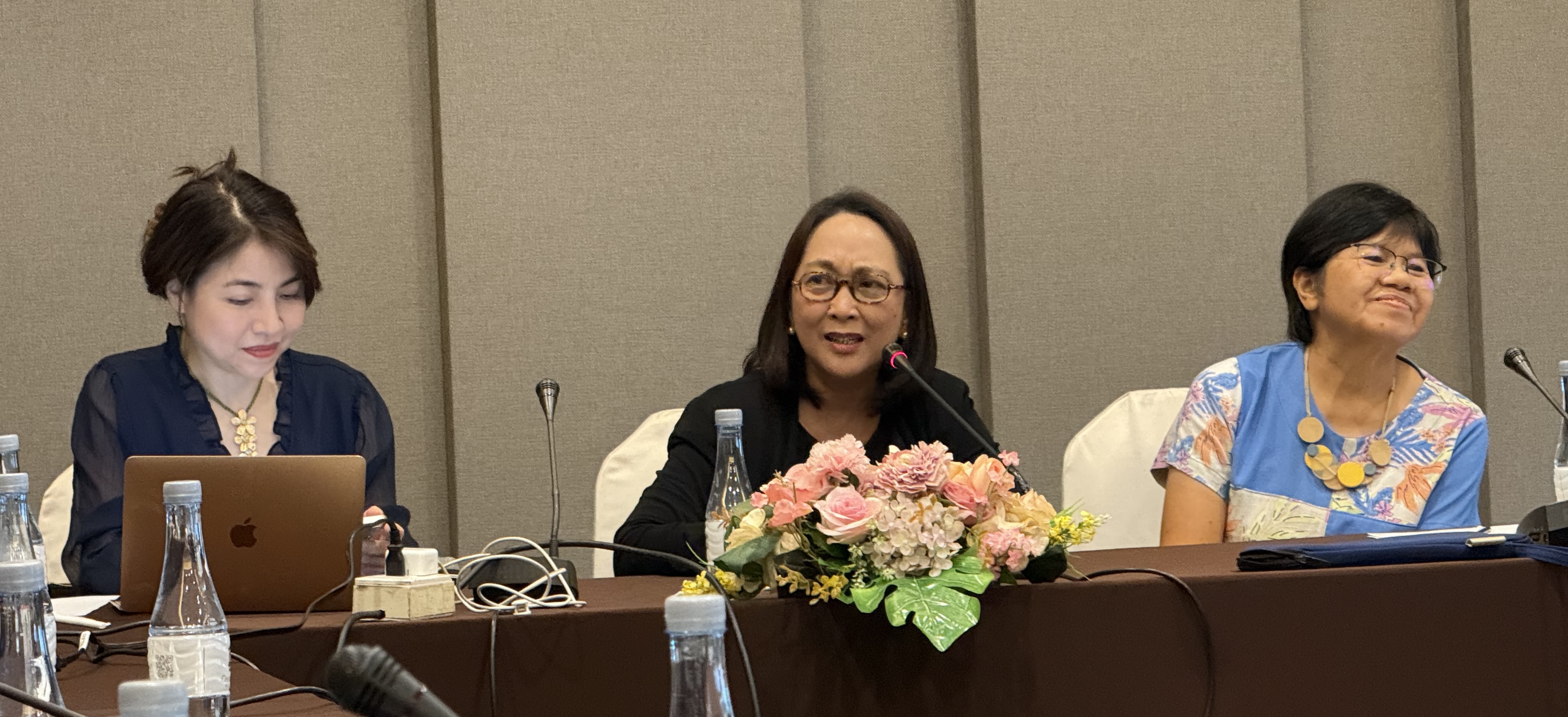
The Boot Camp opened with a briefing by Dr. Olivia Nievera, Senior Public Health Specialist at WHO Thailand, who grounded discussions in current global evidence and trends on youth protection and emerging tobacco products. She emphasized the need to strengthen how information is communicated to young audiences, noting that effective advocacy depends on translating evidence into clear, accessible, and persuasive messaging. Her intervention reinforced the role of youth as credible messengers and highlighted the value of using digital tools, including AI, to improve the reach and impact of tobacco control advocacy.
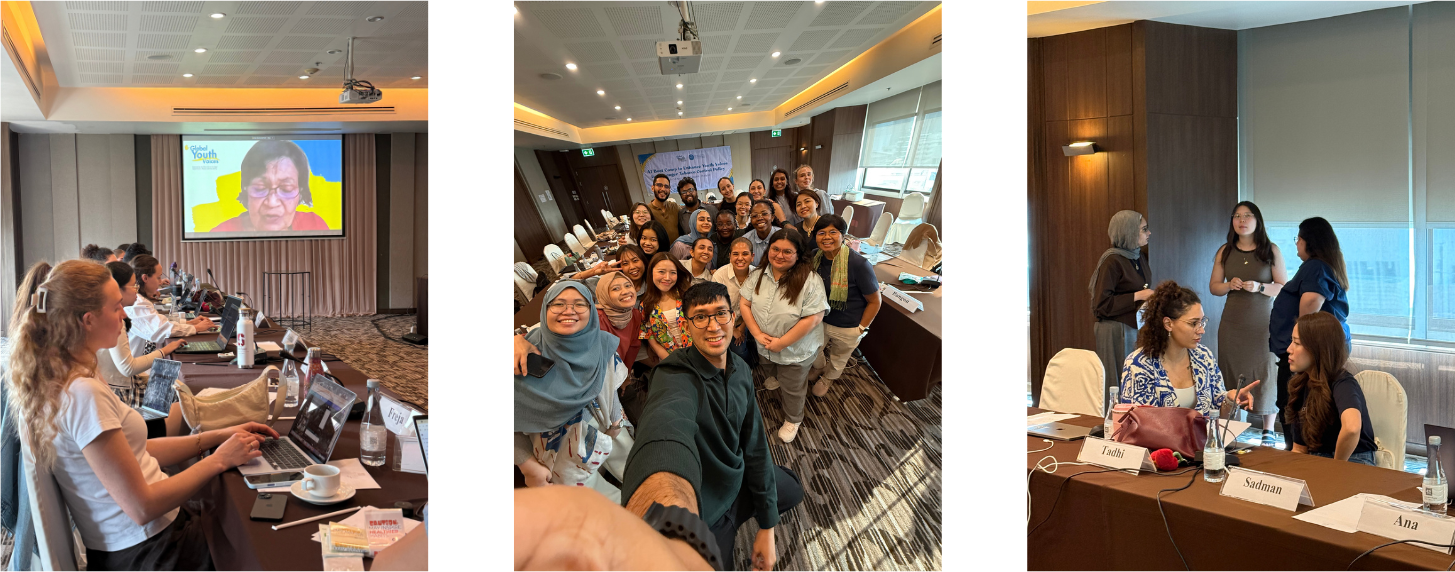
A central part of the Boot Camp was strengthening how youth advocates communicate. Participants focused on using clear, direct language that reflects agreed policy positions, avoids industry framing, and maintains alignment with WHO FCTC principles. The emphasis was on precision and consistency, recognizing that unclear or diluted messaging creates space for weak policy responses.
The Boot Camp introduced practical applications of AI tools in advocacy work. Participants were trained to use AI to generate and adapt content across platforms while maintaining accuracy, credibility, and policy alignment. The approach was grounded in responsible and ethical use, ensuring that technology supports advocacy efforts without shaping or distorting positions.
The sessions translated learnings directly into production, wherein participants developed a range of materials, including social media content, scripts, explainers, infographic concepts, and short-form videos. Each output was reviewed by subject-matter experts against evidence, policy alignment, and message clarity, contributing to a curated global content bank for rollout starting with WNTD 2026 and continuing through the COP12 cycle.
On Day 2, participants presented their outputs to a panel of reviewers, including Dr. Prakit Vathesatogkit (ASH Thailand), Mary Assunta, Deborah Sy, and Bungon Ritthiphakdee. The panel provided critical feedback on the materials developed during the production sessions, focusing on strengthening policy linkages, sharpening framing, and removing language that could be misinterpreted or weakened. Participants were challenged to move beyond general awareness messaging and ground their content in clear, high-ambition policy demands. This exchange shifted how participants approached advocacy, reinforcing the need for precision, discipline, and context-specific messaging when addressing tobacco control issues in their respective countries.
The Boot Camp also established a continuation structure to sustain this work beyond the three-day program. A trained group of youth advocates will support coordinated content deployment and maintain consistent messaging across countries and platforms. The focus moving forward is sustained, aligned advocacy that reinforces GYV’s core policy direction.
GYV continues to call for comprehensive bans on youth-targeted addictive products, strong liability measures to hold the tobacco industry accountable for the harms it causes, and full protection of public health policy from industry interference.
The next phase is implementation, finalizing materials, coordinated global advocacy that maintains pressure on governments to adopt policies that protect youth and hold the tobacco industry accountable.